engine Iran
Cellphone / Whatsapp: +989122003350
| cummins-market |
| Iran |
| 021-55406939 |
Cummins engine cylinder head
The Cummins engine cylinder head is cast from GJV-450 or GJV-500 grade alloyed grey cast iron. The casting process is performed using the lost foam or green sand method with precise composition control. The intake and exhaust ports are designed with a swirl pattern to optimize turbulent air flow. The intake valve seat diameter in the 6BT model equals 42 millimeters and the exhaust valve seat equals 38 millimeters. The wall thickness between seats in critical areas is maintained at a minimum of 6 millimeters. The depth of the cooling water gallery around each cylinder is 12 to 15 millimeters with a flow velocity of 1.2 meters per second. The number of cylinder head bolts per cylinder is 4 with a diameter of 16 millimeters and a pitch of 1.5 millimeters. The final bolt torque is applied in two stages of 120 and 180 Newton meters plus an additional 90 degree angle. The flatness tolerance of the cylinder head lower surface is below 0.05 millimeters over the entire length.
The exhaust valve seat is manufactured from copper-based alloy with 15 percent cobalt and 5 percent chromium. The intake valve seat is made from iron-chromium alloy with 12 percent chromium and 2 percent molybdenum. The precise grinding angle of the intake valve seat is 30 degrees and the exhaust valve seat is 45
-24-u3142-cummins-engine-cylinder-head.jpg?width=160&height=160&cropratio=160:160&image=/admin/uploads/سر-سیلندر-موتور-کمنز-CUMMINS-Cummins-engine-cylinder-head-لوازم-یدکی-موتور-کمنز-(کامینز)-24-u3142-cummins-engine-cylinder-head.jpg&url=/admin/uploads/سر-سیلندر-موتور-کمنز-CUMMINS-Cummins-engine-cylinder-head-لوازم-یدکی-موتور-کمنز-(کامینز)-24-u3142-cummins-engine-cylinder-head.jpg "Cummins engine cylinder head")
-24-u3142-cummins-engine-cylinder-head.jpg?width=300&height=300&cropratio=300:300&image=/admin/uploads/سر-سیلندر-موتور-کمنز-CUMMINS-Cummins-engine-cylinder-head-لوازم-یدکی-موتور-کمنز-(کامینز)-24-u3142-cummins-engine-cylinder-head.jpg&url=/admin/uploads/سر-سیلندر-موتور-کمنز-CUMMINS-Cummins-engine-cylinder-head-لوازم-یدکی-موتور-کمنز-(کامینز)-24-u3142-cummins-engine-cylinder-head.jpg "Cummins engine cylinder head") | |
| cummins-market | 021-55406939 |
| cummins-market |
| Iran |
| 021-55406939 |
cummins engine connecting rod
The Cummins engine connecting rod is manufactured from hot forged alloy steel grade 4340 or C70. Heat treatment including hardening and tempering brings the ultimate tensile strength to 950 to 1100 megapascals. The center-to-center length of the connecting rod in the 6BT model equals 169 millimeters. This length in the NTA855 model reaches 210 millimeters and in the KTA19 model reaches 228 millimeters. The small end bore diameter (piston side) in the 6BT measures 51 millimeters. The big end bore diameter (crankshaft side) in this model is 76 millimeters. The connecting rod cross section at midpoints is designed as an I-beam shape with web thickness of 8 to 12 millimeters. The complete connecting rod weight in the 6BT model is approximately 2.8 kilograms and in the KTA19 model is approximately 5.5 kilograms. The parallelism tolerance between the small and big end bores is controlled below 0.05 millimeters over the entire length.
The big end bore is cut at an oblique angle of 45 degrees relative to the vertical axis. The connecting rod bolts are manufactured from grade 12.9 steel with a diameter of 12 millimeters in the 6BT and a diameter of 16 millimeters in the KTA19. The final bolt torque in the 6BT equals 70 Newton meters plus an additional 90 degree angle. In the KTA19, thi
-24-u3142-cummins-engine-connecting-rod.jpg?width=160&height=160&cropratio=160:160&image=/admin/uploads/شاتون-موتور-کمنز-CUMMINS-cummins-engine-connecting-rod-لوازم-یدکی-موتور-کمنز-(کامینز)-24-u3142-cummins-engine-connecting-rod.jpg&url=/admin/uploads/شاتون-موتور-کمنز-CUMMINS-cummins-engine-connecting-rod-لوازم-یدکی-موتور-کمنز-(کامینز)-24-u3142-cummins-engine-connecting-rod.jpg "cummins engine connecting rod")
-24-u3142-cummins-engine-connecting-rod.jpg?width=300&height=300&cropratio=300:300&image=/admin/uploads/شاتون-موتور-کمنز-CUMMINS-cummins-engine-connecting-rod-لوازم-یدکی-موتور-کمنز-(کامینز)-24-u3142-cummins-engine-connecting-rod.jpg&url=/admin/uploads/شاتون-موتور-کمنز-CUMMINS-cummins-engine-connecting-rod-لوازم-یدکی-موتور-کمنز-(کامینز)-24-u3142-cummins-engine-connecting-rod.jpg "cummins engine connecting rod") | |
| cummins-market | 021-55406939 |
| cummins-market |
| Iran |
| 021-55406939 |
cummins engine oil pump
The Cummins engine oil pump is manufactured as an internal gear type (Gerotor) with an inner and outer rotor. The rotor material is powder metallurgy steel with a density of 7.4 grams per cubic centimeter. The number of teeth on the inner rotor in the 6BT model equals 7 and on the outer rotor equals 8 teeth. The outer diameter of the complete rotor assembly in this model is 65 millimeters and the thickness is 20 millimeters. The radial clearance at the tooth tips (tip clearance) in the original sample is set between 0.08 and 0.12 millimeters. The axial clearance between the rotor and pump housing (end play) is 0.04 to 0.08 millimeters. The oil displacement volume per pump revolution in the 6BT model equals 22 cubic centimeters. The KTA19 model features a larger rotor with a diameter of 95 millimeters and a thickness of 32 millimeters. The displacement volume in the KTA19 reaches 65 cubic centimeters per revolution. The pump housing is cast from grey cast iron GCI-250 with a pressure tolerance of 14 bar.
The Cummins oil pump supplies oil pressure of 2.5 to 5.5 bar at rated engine speed. The volumetric flow rate in the 6BT model at 2500 RPM equals 65 liters per minute. The QSL9 model has a flow rate of 110 liters per minute and the KTA19 model has a flow rate of 180 liters per m
-24-u3142-cummins-oil-pump.jpg?width=160&height=160&cropratio=160:160&image=/admin/uploads/اویل-پمپ-موتور-کمنز-CUMMINS-cummins-engine-oil-pump-لوازم-یدکی-موتور-کمنز-(کامینز)-24-u3142-cummins-oil-pump.jpg&url=/admin/uploads/اویل-پمپ-موتور-کمنز-CUMMINS-cummins-engine-oil-pump-لوازم-یدکی-موتور-کمنز-(کامینز)-24-u3142-cummins-oil-pump.jpg "cummins engine oil pump")
-24-u3142-cummins-oil-pump.jpg?width=300&height=300&cropratio=300:300&image=/admin/uploads/اویل-پمپ-موتور-کمنز-CUMMINS-cummins-engine-oil-pump-لوازم-یدکی-موتور-کمنز-(کامینز)-24-u3142-cummins-oil-pump.jpg&url=/admin/uploads/اویل-پمپ-موتور-کمنز-CUMMINS-cummins-engine-oil-pump-لوازم-یدکی-موتور-کمنز-(کامینز)-24-u3142-cummins-oil-pump.jpg "cummins engine oil pump") | |
| cummins-market | 021-55406939 |
| cummins-market |
| Iran |
| 021-55406939 |
cummins engine water pump
The Cummins engine water pump is of the centrifugal type with a closed impeller and a volute housing. The pump housing material is grey cast iron GCI-250 with an electrostatic anti-corrosion coating. The impeller diameter in the 6BT model equals 95 millimeters with 6 forward-curved blades. The KTA19 model features a 140 millimeter impeller with 8 blades and a thickness of 12 millimeters. The water pump bearing is a double-ball type with a diameter of 35 millimeters and a double lip seal. The axial clearance between the impeller and the pump housing in the original sample is set between 0.5 and 0.8 millimeters. The water displacement volume in the 6BT model is approximately 180 liters per minute at 2500 RPM. The QSK50 model has a flow rate of 650 liters per minute and an impeller diameter of 220 millimeters. The pump pulley is manufactured from ductile cast iron with 6 V-shaped grooves and an outer diameter of 130 millimeters.
The Cummins water pump supplies an output pressure of 0.8 to 1.5 bar at rated engine speed. The flow rate in the 6BT model equals 2200 liters per hour and in the KTA19 model equals 5500 liters per hour. The mechanical seal of the water pump is manufactured from silicon carbide with a hardness of 1500 Vickers. This seal is capable of withstanding temperatu
-24-u3142-cummins-water-pump.jpg?width=160&height=160&cropratio=160:160&image=/admin/uploads/واتر-پمپ-موتور-کمنز-CUMMINS-cummins-engine-water-pump-لوازم-یدکی-موتور-کمنز-(کامینز)-24-u3142-cummins-water-pump.jpg&url=/admin/uploads/واتر-پمپ-موتور-کمنز-CUMMINS-cummins-engine-water-pump-لوازم-یدکی-موتور-کمنز-(کامینز)-24-u3142-cummins-water-pump.jpg "cummins engine water pump")
-24-u3142-cummins-water-pump.jpg?width=300&height=300&cropratio=300:300&image=/admin/uploads/واتر-پمپ-موتور-کمنز-CUMMINS-cummins-engine-water-pump-لوازم-یدکی-موتور-کمنز-(کامینز)-24-u3142-cummins-water-pump.jpg&url=/admin/uploads/واتر-پمپ-موتور-کمنز-CUMMINS-cummins-engine-water-pump-لوازم-یدکی-موتور-کمنز-(کامینز)-24-u3142-cummins-water-pump.jpg "cummins engine water pump") | |
| cummins-market | 021-55406939 |
| cummins-market |
| Iran |
| 021-55406939 |
cummins engine camshaft
The Cummins engine camshaft is manufactured from forged alloy steel grade 5150 or 1050. Induction hardening heat treatment raises the lobe surface hardness to 55 to 60 HRC. The hardened case depth at the lobe tips is between 3 and 5 millimeters. The number of camshaft lobes in a Cummins inline 6-cylinder engine equals 12. The main journal diameter (bearing surface on block) in the 6BT model equals 63.5 millimeters. This diameter in the NTA855 model reaches 76.2 millimeters and in the KTA19 model reaches 88.9 millimeters. The lobe height from base circle to nose in the 6BT is approximately 45 millimeters. The cam lift value (difference between base circle and nose radius) in this model is 9.5 millimeters. The angular spacing between two adjacent lobes for valve timing adjustment is 120 degrees. The camshaft weight in the 6BT model is approximately 12 kilograms and in the KTA19 model is approximately 28 kilograms.
The cam profile on the Cummins camshaft is designed as a constant maximum acceleration type with a circular arc at the nose. This profile distributes the opening and closing velocity of the valves in a controlled manner. The lobe surface finish after final grinding reaches a roughness below 0.2 micrometers Ra. The roundness tolerance of the camshaft main journals in th
-24-u3142-cummins-engine-camshaft.jpg?width=160&height=160&cropratio=160:160&image=/admin/uploads/میل-سوپاپ-موتور-کمنز-CUMMINS-cummins-engine-camshaft-لوازم-یدکی-موتور-کمنز-(کامینز)-24-u3142-cummins-engine-camshaft.jpg&url=/admin/uploads/میل-سوپاپ-موتور-کمنز-CUMMINS-cummins-engine-camshaft-لوازم-یدکی-موتور-کمنز-(کامینز)-24-u3142-cummins-engine-camshaft.jpg "cummins engine camshaft")
-24-u3142-cummins-engine-camshaft.jpg?width=300&height=300&cropratio=300:300&image=/admin/uploads/میل-سوپاپ-موتور-کمنز-CUMMINS-cummins-engine-camshaft-لوازم-یدکی-موتور-کمنز-(کامینز)-24-u3142-cummins-engine-camshaft.jpg&url=/admin/uploads/میل-سوپاپ-موتور-کمنز-CUMMINS-cummins-engine-camshaft-لوازم-یدکی-موتور-کمنز-(کامینز)-24-u3142-cummins-engine-camshaft.jpg "cummins engine camshaft") | |
| cummins-market | 021-55406939 |
| cummins-market |
| Iran |
| 021-55406939 |
Cummins engine oil cooler
The Cummins engine oil cooler is manufactured as a plate type with parallel channels. The plate material is aluminum 6061 with thermal conductivity of 200 watts per meter-Kelvin. Each plate thickness in the standard model is 1.2 millimeters and the spacing between plates is 2.5 millimeters. The number of plates in the 6BT model equals 35 and in the NTA855 model equals 55. The total heat exchange surface area in the 6BT sample is calculated at approximately 0.45 square meters. This value in the NTA855 model reaches 0.85 square meters. The allowable working pressure of the oil cooler is 12 bar and the hydrostatic test pressure is 18 bar. The nominal oil flow rate in the 6BT model equals 35 liters per minute. This flow rate in the NTA855 model increases to 60 liters per minute. The incoming oil temperature reaches up to 130 degrees and the outgoing temperature after cooling drops to 95 degrees. A temperature difference of 35 degrees indicates an efficiency of 82 percent.
The Cummins oil cooler is capable of dissipating 25 to 45 kilowatts of heat from the engine oil. In construction machinery applications, maximum heat dissipation of 35 kilowatts is sufficient for 6-cylinder engines. Marine applications require 45 kilowatts dissipation because engine speed remains high. Generator
-24-u3142-cummins-engine-oil-cooler.jpg?width=160&height=160&cropratio=160:160&image=/admin/uploads/کولر-روغن-موتور-کمنز-CUMMINS-Cummins-engine-oil-cooler-لوازم-یدکی-موتور-کمنز-(کامینز)-24-u3142-cummins-engine-oil-cooler.jpg&url=/admin/uploads/کولر-روغن-موتور-کمنز-CUMMINS-Cummins-engine-oil-cooler-لوازم-یدکی-موتور-کمنز-(کامینز)-24-u3142-cummins-engine-oil-cooler.jpg "Cummins engine oil cooler")
-24-u3142-cummins-engine-oil-cooler.jpg?width=300&height=300&cropratio=300:300&image=/admin/uploads/کولر-روغن-موتور-کمنز-CUMMINS-Cummins-engine-oil-cooler-لوازم-یدکی-موتور-کمنز-(کامینز)-24-u3142-cummins-engine-oil-cooler.jpg&url=/admin/uploads/کولر-روغن-موتور-کمنز-CUMMINS-Cummins-engine-oil-cooler-لوازم-یدکی-موتور-کمنز-(کامینز)-24-u3142-cummins-engine-oil-cooler.jpg "Cummins engine oil cooler") | |
| cummins-market | 021-55406939 |
| cummins-market |
| Iran |
| 021-55406939 |
Cummins engine crankshaft
The Cummins engine crankshaft is manufactured from forged alloy steel grade 4340 or 1541. Induction hardening heat treatment of the journals raises surface hardness to 55 to 60 HRC. The main journal diameter in the 6BT model equals 76.2 millimeters and in the NTA855 model equals 88.9 millimeters. The connecting rod journal diameter in the 6BT series measures 63.5 millimeters and in the KTA19 series measures 76.2 millimeters. The distance between journal centers (stroke) in the 6BT series is approximately 120 millimeters. This value increases to 152 millimeters in the NTA855 series and to 159 millimeters in the KTA19 series. The babbit layer thickness on original bearings is 0.5 millimeters with pressure tolerance of 180 bar. In marine applications, journals are nickel-plated to withstand salt corrosion. Generator applications require a wider thrust washer with 6 millimeters thickness.
The Cummins crankshaft is machined with six counterweights to eliminate torsional vibration. The total crankshaft bending tolerance under standard conditions is below 0.05 millimeters per meter length. Roundness tolerance for main and connecting rod journals is 0.005 and 0.008 millimeters respectively. Journal surface roughness after polishing reaches below 0.1 micrometers Ra. Dynamic balancing i
-24-u3142-cummins-crankshaft.jpg?width=160&height=160&cropratio=160:160&image=/admin/uploads/میل-لنگ-موتور-کمنز-CUMMINS-Cummins-engine-crankshaft--لوازم-یدکی-موتور-کمنز-(کامینز)-24-u3142-cummins-crankshaft.jpg&url=/admin/uploads/میل-لنگ-موتور-کمنز-CUMMINS-Cummins-engine-crankshaft--لوازم-یدکی-موتور-کمنز-(کامینز)-24-u3142-cummins-crankshaft.jpg "Cummins engine crankshaft")
-24-u3142-cummins-crankshaft.jpg?width=300&height=300&cropratio=300:300&image=/admin/uploads/میل-لنگ-موتور-کمنز-CUMMINS-Cummins-engine-crankshaft--لوازم-یدکی-موتور-کمنز-(کامینز)-24-u3142-cummins-crankshaft.jpg&url=/admin/uploads/میل-لنگ-موتور-کمنز-CUMMINS-Cummins-engine-crankshaft--لوازم-یدکی-موتور-کمنز-(کامینز)-24-u3142-cummins-crankshaft.jpg "Cummins engine crankshaft") | |
| cummins-market | 021-55406939 |
| cummins-market |
| Iran |
| 021-55406939 |
cummins engine turbocharger
The Cummins engine turbocharger is designed as a hot gas type with floating bearings (full floater). The turbine wheel is manufactured from superalloy Inconel 713C with continuous temperature resistance of 950 degrees Celsius. The turbine wheel diameter in the HX35 model (for 6BT) equals 56 millimeters and in the HX40 model (for 6CT) equals 60 millimeters. The compressor wheel is manufactured from aluminum alloy 2618 with hard anodized coating and a diameter of 50 to 76 millimeters. The compressor pressure ratio in standard models varies between 2.2 and 3.5 bar. The maximum rotor speed in smaller turbochargers reaches 150,000 revolutions per minute. The floating bearings are placed on a 4340 steel shaft with radial clearance of 0.025 to 0.060 millimeters. The turbocharger lubrication system is cooled with oil pressure of 2.5 to 5.0 bar and a flow rate of 3 liters per minute.
The exhaust gas temperature entering the turbine is controlled between 650 and 750 degrees Celsius at rated conditions. The mass air flow rate in the HX35 model is approximately 0.35 kilograms per second and in the HX40 model reaches 0.45 kilograms per second. The adiabatic efficiency of the compressor at the design point is 76 to 78 percent. The turbo lag response time from throttle to full boost pressure
-24-u3142-cummins-turbocharger.jpg?width=160&height=160&cropratio=160:160&image=/admin/uploads/توربوشارژر-موتور-کمنز-CUMMINS-cummins-engine-turbocharger-لوازم-یدکی-موتور-کمنز-(کامینز)-24-u3142-cummins-turbocharger.jpg&url=/admin/uploads/توربوشارژر-موتور-کمنز-CUMMINS-cummins-engine-turbocharger-لوازم-یدکی-موتور-کمنز-(کامینز)-24-u3142-cummins-turbocharger.jpg "cummins engine turbocharger")
-24-u3142-cummins-turbocharger.jpg?width=300&height=300&cropratio=300:300&image=/admin/uploads/توربوشارژر-موتور-کمنز-CUMMINS-cummins-engine-turbocharger-لوازم-یدکی-موتور-کمنز-(کامینز)-24-u3142-cummins-turbocharger.jpg&url=/admin/uploads/توربوشارژر-موتور-کمنز-CUMMINS-cummins-engine-turbocharger-لوازم-یدکی-موتور-کمنز-(کامینز)-24-u3142-cummins-turbocharger.jpg "cummins engine turbocharger") | |
| cummins-market | 021-55406939 |
| cummins-market |
| Iran |
| 021-55406939 |
cummins engine fuel injection pump
The Cummins engine fuel injection pump is available in two types: inline pump and distributor pump. The P and MW series inline pumps are used for heavy engines such as NTA855 and KTA19. The maximum injection pressure in Cummins inline pumps varies between 800 and 1200 bar. The VE series distributor pump is designed for smaller engines like 4BT and 6BT. The injection pressure in these models reaches 650 to 850 bar. The number of plungers in a 6-cylinder inline pump equals 6 with a diameter of 10 to 12 millimeters. The plunger diameter in the 6BT model equals 10 millimeters with a stroke of 12 millimeters. The NTA855 model has a 12 millimeter plunger with a stroke of 15 millimeters. The precision machining tolerance between plunger and barrel reaches 0.002 millimeters. The plunger surface roughness after polishing reaches below 0.05 micrometers Ra.
Injection timing on the Cummins pump is adjusted using a timing screw and centrifugal spring. The advance angle on 6BT engines is approximately 12 degrees before top dead center. This angle reaches 14 degrees on the NTA855 and 16 degrees on the KTA19. The fuel rack performs linear movement of plungers to adjust engine speed. The mechanical or electronic governor maintains constant speed on diesel generators. The fuel delivery rate per
-24-u3142-cummins-fuel-pump.jpg?width=160&height=160&cropratio=160:160&image=/admin/uploads/پمپ-انژکتور-موتور-کمنز-CUMMINS-cummins-engine-fuel-injection-pump-لوازم-یدکی-موتور-کمنز-(کامینز)-24-u3142-cummins-fuel-pump.jpg&url=/admin/uploads/پمپ-انژکتور-موتور-کمنز-CUMMINS-cummins-engine-fuel-injection-pump-لوازم-یدکی-موتور-کمنز-(کامینز)-24-u3142-cummins-fuel-pump.jpg "cummins engine fuel injection pump")
-24-u3142-cummins-fuel-pump.jpg?width=300&height=300&cropratio=300:300&image=/admin/uploads/پمپ-انژکتور-موتور-کمنز-CUMMINS-cummins-engine-fuel-injection-pump-لوازم-یدکی-موتور-کمنز-(کامینز)-24-u3142-cummins-fuel-pump.jpg&url=/admin/uploads/پمپ-انژکتور-موتور-کمنز-CUMMINS-cummins-engine-fuel-injection-pump-لوازم-یدکی-موتور-کمنز-(کامینز)-24-u3142-cummins-fuel-pump.jpg "cummins engine fuel injection pump") | |
| cummins-market | 021-55406939 |
| deutz-market |
| Iran |
| 021-22087856 |
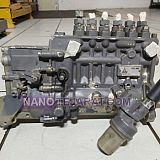
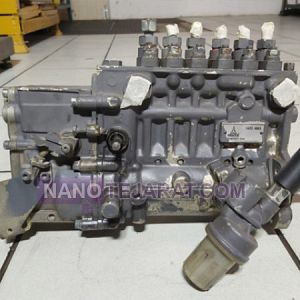
deutz engine 912 1011 1012 and 1013 injection pump
Fuel injection pumps for DEUTZ 912, 1011, 1012, and 1013 engines are precision-engineered to deliver exact fuel volumes at high pressures up to 1800 bar. These pumps feature calibrated plunger and barrel assemblies, ensuring injection timing accuracy within ±0.5 degrees crank angle. Materials such as hardened alloy steel and wear-resistant coatings provide long-term durability under continuous operation. Flow rates are precisely matched to each engine model, ranging from 60 to 120 liters per hour depending on cylinder configuration. The pumps maintain stable performance at operating temperatures between -20°C and 95°C, and are designed to resist cavitation, vibration, and thermal expansion. Proper calibration and maintenance of the injection pump optimize combustion efficiency, reduce emissions, and extend engine life across DEUTZ 912, 1011, 1012, and 1013 series engines.
Each pump incorporates precise control mechanisms for fuel delivery, including mechanical governors or electronic actuators in advanced models. The pump’s sealing components are engineered to withstand pressures exceeding 1800 bar without leakage. Tolerances in the plunger bore, delivery valve, and timing gears are maintained within ±0.02 mm to ensure repeatable performance. These pumps support injectio
 | |
| deutz-market | 021-22087856 |
| deutz-market |
| Iran |
| 021-22087856 |
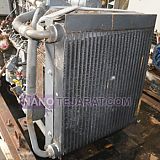
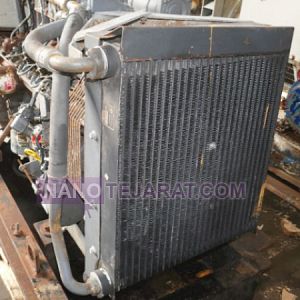
deutz engine 912 1011 1012 and 1013 water radiator
Radiators for DEUTZ 912, 1011, 1012, and 1013 engines are engineered to maintain optimal coolant temperature and prevent engine overheating under continuous operation. Core construction uses high-efficiency aluminum or copper fins with a tube density of 16–22 fins per inch, providing effective heat dissipation up to 120 kW thermal load. Tanks are made from reinforced polymer or welded aluminum, capable of withstanding pressures up to 2.0 bar and temperatures up to 110°C. Flow channels are optimized to ensure uniform coolant distribution, minimizing hot spots and thermal stress on cylinder heads. Radiator designs include inlet and outlet diameters from 32 to 50 mm depending on engine model, maintaining coolant flow rates of 60–120 liters per minute. Proper installation and maintenance reduce corrosion, scaling, and cavitation, enhancing engine reliability and prolonging service intervals.
Each radiator integrates mounting brackets and pressure caps with spring settings of 1.5–2.0 bar to maintain system pressure and prevent coolant boil-over. Core thickness ranges from 25 to 45 mm, balancing cooling efficiency and airflow resistance. Radiators are designed for vibration resistance up to 5 g at 50 Hz, protecting tubes and fins from fatigue. High-precision brazing or TIG we
 | |
| deutz-market | 021-22087856 |
| deutz-market |
| Iran |
| 021-22087856 |
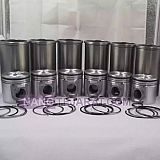
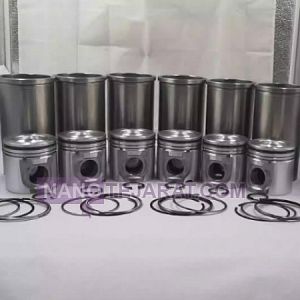
deutz engine liner piston 912 1011 1012 and 1013
The Deutz Engine Liner Piston systems for models 912, 1011, 1012, and 1013 represent a pivotal aspect of Deutz’s long-standing commitment to engineering reliable, efficient, and high-performance engines. These engines are widely used in agricultural machinery, construction equipment, and industrial applications. The 912 series, which is among the earliest in this family, is well-known for its compact design and robust performance in demanding conditions. The liner piston units in these engines are engineered for optimal combustion efficiency, reduced fuel consumption, and minimized emissions, contributing to their longstanding reputation for reliability. The design ensures that the pistons remain durable even under the stress of high compression ratios, frequent load changes, and extreme operational temperatures.
In the 1011, 1012, and 1013 models, Deutz refined these piston-liner systems further to improve their longevity and maintainability. The 1011 series features advanced materials and precision-engineered components, helping to prevent premature wear and tear that could affect engine efficiency. As you move to the 1012 and 1013 models, the focus shifts even more toward enhancing performance and reducing operational costs. These engines offer even better thermal efficie
 | |
| deutz-market | 021-22087856 |
| deutz-market |
| Iran |
| 021-22087856 |
deutz engine 912 1011 1012 and 1013 turbocharger
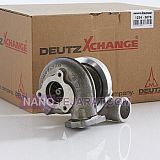
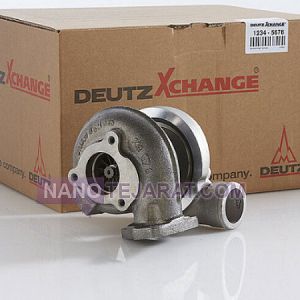
Turbochargers for DEUTZ 912, 1011, 1012, and 1013 diesel engines are precision-engineered to increase air intake density and improve combustion efficiency. The turbocharger uses exhaust gas energy to spin a turbine connected to a compressor, boosting intake air pressure up to 1.2–1.5 bar above atmospheric. This increased air mass allows higher fuel injection rates, enhancing engine output by 15–25% without raising engine displacement. Turbine and compressor housings are made from heat-resistant alloys capable of withstanding exhaust temperatures up to 650°C. Shaft and bearing assemblies use high-precision tolerances of ±0.02 mm, ensuring minimal friction and long service life. Proper turbocharger calibration maintains optimal boost across engine speeds, reduces smoke emissions, and improves fuel economy by 3–5% in typical operating cycles.
The DEUTZ turbocharger system integrates an intercooler in some models to reduce intake air temperature by 40–60°C, increasing air density and combustion efficiency. Wastegate valves control maximum boost pressure, preventing over-pressurization and engine knock. The turbine wheel diameter ranges from 40 to 60 mm depending on engine model, with rotational speeds up to 180,000 rpm. Lubrication is provided through the engine oil cir
 | |
| deutz-market | 021-22087856 |
| cummins-market |
| Iran |
| 021-55406939 |
cummins engine water radiator
The radiator for the Cummins 6BT5.9 engine is manufactured from an aluminum 6061 core with a fin density of 12 fins per square centimeter. The core dimensions for this model are 520 by 420 by 45 millimeters. The QSB6.7 model features an aluminum-copper core with 14 fins and dimensions of 580 by 470 by 55 millimeters. The QSL9 radiator uses aluminum alloy 6063 with oval tubes and a fin density of 15 fins. The QSL9 core dimensions measure 650 by 520 by 60 millimeters with a header plate thickness of 2.5 millimeters. The QSX15 model has a copper-brass radiator with 16 fins per square centimeter and dimensions of 780 by 630 by 70 millimeters. The water tube thickness in the QSX15 equals 0.6 millimeters and the working pressure is 1.2 bar.
The Cummins KTA19 engine radiator is manufactured with a four-row copper-brass core and 18 fins per square centimeter. The core dimensions for this model are 890 by 750 by 85 millimeters with a weight of 65 kilograms. The heat dissipation surface area of the KTA19 radiator is approximately 28 square meters with a cooling capacity of 180 kilowatts. The QSK50 model features the largest radiator with a stainless carbon steel core and 20 fins. The dimensions of this radiator are 1200 by 1050 by 120 millimeters with a header plate thickness of 5 milli
-24-u3142-cummins-water-radiator.jpg?width=160&height=160&cropratio=160:160&image=/admin/uploads/رادیاتور-آب-موتور-کمنز-CUMMINS-cummins-engine-water-radiator-لوازم-یدکی-موتور-کمنز-(کامینز)-24-u3142-cummins-water-radiator.jpg&url=/admin/uploads/رادیاتور-آب-موتور-کمنز-CUMMINS-cummins-engine-water-radiator-لوازم-یدکی-موتور-کمنز-(کامینز)-24-u3142-cummins-water-radiator.jpg "cummins engine water radiator")
-24-u3142-cummins-water-radiator.jpg?width=300&height=300&cropratio=300:300&image=/admin/uploads/رادیاتور-آب-موتور-کمنز-CUMMINS-cummins-engine-water-radiator-لوازم-یدکی-موتور-کمنز-(کامینز)-24-u3142-cummins-water-radiator.jpg&url=/admin/uploads/رادیاتور-آب-موتور-کمنز-CUMMINS-cummins-engine-water-radiator-لوازم-یدکی-موتور-کمنز-(کامینز)-24-u3142-cummins-water-radiator.jpg "cummins engine water radiator") | |
| cummins-market | 021-55406939 |
| deutz-market |
| Iran |
| 021-22087856 |
DEUTZ engine engine valve
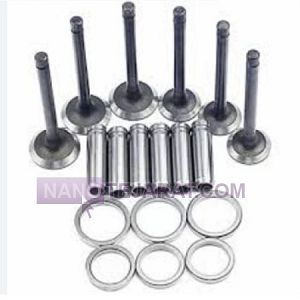
The DEUTZ diesel engine uses separate valve seats for intake and exhaust functions. Intake valve seats are manufactured from sintered iron alloy with 15 percent chromium. Exhaust valve seats contain molybdenum and nickel for high temperature resistance up to 750 degrees Celsius. The seat angle is precisely ground at 45 degrees with a tolerance of plus-minus 0.1 degree. Seat width measures 1.8 to 2.2 millimeters for intake valves. Exhaust seats have a wider contact surface of 2.5 to 3.0 millimeters. The interference fit between seat and cylinder head equals 0.08 to 0.12 millimeters. This press fit prevents loosening during thermal expansion cycles. Seat concentricity relative to the valve guide stays below 0.03 millimeters. Hardness of exhaust seats reaches 350 to 400 HB for wear resistance.
Valve guides in DEUTZ engines are made from phosphor bronze or gray cast iron with copper infiltration. Inner diameter of the guide measures 8.00 to 12.00 millimeters depending on engine series. The radial clearance between valve stem and guide equals 0.03 to 0.07 millimeters for intake valves. Exhaust valves require larger clearance of 0.05 to 0.09 millimeters due to higher thermal expansion. Guide length varies from 45 to 65 millimeters to ensure proper stem alignment. The installed heigh
 | |
| deutz-market | 021-22087856 |